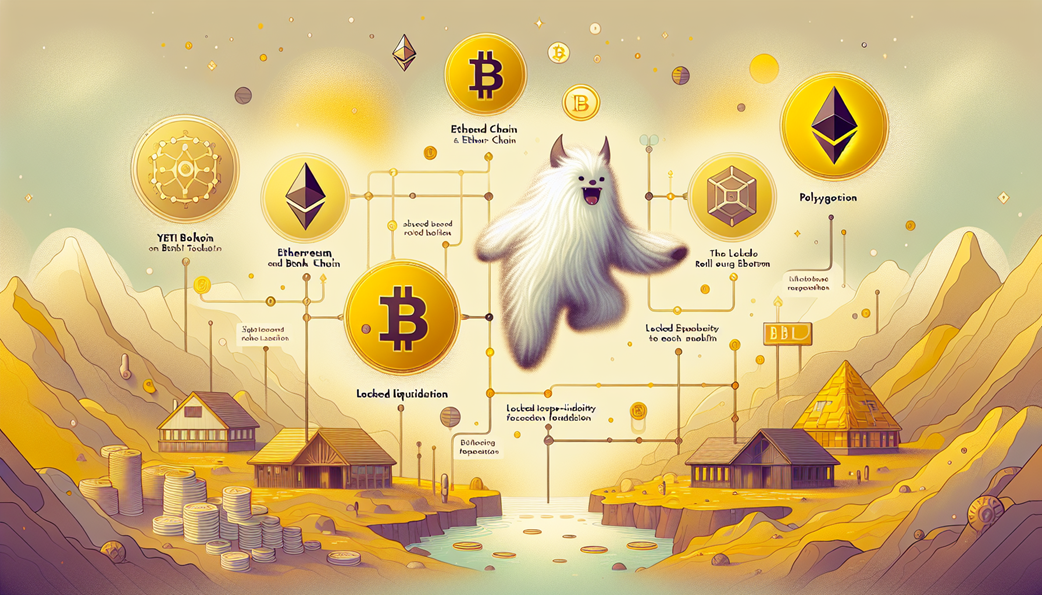
 BNB Chain has been a great home for YETI. Cheap transactions, fast blocks, an active community — the conditions for a community-driven token to find its footing and grow. But home can also become a ceiling, and YETI's team has decided it's time to break through.
The multi-chain expansion is officially in motion.
What YETI is
YETI Token is a community-driven project on BNB Chain with a brand identity rooted in the mountaineering and exploration mythos. The yeti figure — part cryptid, part aspirational explorer — has given the project a distinctive aesthetic that's neither pure meme nor corporate polish. It's something weirder and more interesting.
The community has grown around themes of perseverance, discovery, and the kind of long-haul commitment that expedition climbers exemplify. Marketing, events, and community culture all reinforce that identity. It works because the team commits to it authentically rather than treating it as disposable branding.
Live market data for YETI ↗ is available on DexScreener for anyone tracking trading activity, liquidity depth, and holder trends.
Why expand now?
Community tokens face a common plateau problem. Early growth comes from the original cohort of believers, social media virality, and organic word-of-mouth within one chain's ecosystem. At some point, that growth saturates. Most holders on that chain who would have found the project have found it. Further growth requires new paths.
For YETI, expansion beyond BNB Chain is the obvious next path. A few concrete reasons:
● Different user bases live primarily on different chains. Ethereum DeFi natives, Solana traders, Base casuals — each group has distinct preferences and habits
● Liquidity dynamics improve when a token has meaningful presence across multiple chains
● Resilience increases — being tied to a single chain means being exposed to any problems specific to that chain
● Narrative expansion opportunities emerge when the token can participate in multi-chain DeFi ecosystems
The timing also matters. BNB Chain liquidity is strong and stable. Expansion from a position of strength is much better than expansion from desperation.
The expansion plan
The plan prioritizes quality over coverage. Rather than trying to launch simultaneously on five chains and producing five mediocre deployments, YETI is rolling out sequentially:
Ethereum first. The largest pool of crypto capital lives on Ethereum. For a community token, Ethereum exposure opens the door to a holder base that often doesn't venture onto alternative chains.
Polygon second. Low fees and a mature DeFi ecosystem make Polygon an ideal fit for active community engagement. Many community events work better when transaction costs are negligible.
Additional chains based on traction. Rather than committing to a fixed third and fourth target, the team will evaluate where YETI is finding traction and expand accordingly. Community input will shape these decisions.
Infrastructure requirements
Cross-chain expansion is harder than it sounds. Getting it right requires:
Bridge infrastructure that actually works. Most of the worst crypto exploits have been bridge-related. YETI is using established, audited bridge protocols rather than rolling custom cross-chain code.
Liquidity that scales correctly. Each new chain needs enough liquidity to be usable without stripping so much from the origin chain that BNB Chain depth suffers. That balance requires careful bootstrapping.
Unified supply accounting. The total YETI supply across all chains must remain constant. Bugs in this accounting have caused real projects to discover mysterious additional tokens on new chains. Not a good look.
Chain-native community presence. Technical deployment is step one. Building actual community on each new chain — holders who care, engage, and participate — is the harder second step.
Security as a cross-chain concern
Everything that mattered for YETI's security on BNB Chain matters equally on every chain the token expands to. The liquidity pool on PancakeSwap is secured through a verifiable liquidity locker ↗ with on-chain records that anyone can audit. Each new chain's primary DEX pool will follow the same pattern — locked liquidity, published certificates, independent verification.
This isn't security theater. For a community token specifically, the whole investment thesis rests on trust. Holders need confidence that the team isn't going to pull liquidity on any chain. Doing it right on one chain doesn't grant a security pass on others; the commitment has to be renewed with every expansion.
Contract deployments on new chains will be verified, with source code matching the audited BNB Chain version. Admin controls will be constrained identically. The goal: a holder on Ethereum should have the same security guarantees as a holder on BNB Chain. No weak link.
Liquidity strategy
Fragmentation is the main risk in cross-chain expansion. YETI's liquidity strategy addresses it through a few principles:
● BNB Chain remains the primary liquidity hub with the deepest pools
● New chains launch with seed liquidity sized to local demand — enough to be tradeable, not so much that BNB Chain depth suffers
● Organic LP provision is encouraged rather than top-down liquidity injections
● Arbitrageurs provide the balancing mechanism that keeps prices aligned across chains
This is more patient than the "flood every chain with liquidity on day one" approach. It should produce better long-term outcomes for holders across every chain.
What success looks like
Six months from now, a successful expansion would look like:
● Meaningful volume on at least two new chains beyond BNB Chain
● Community growth on new chains driven by new holders rather than existing ones migrating
● Tight cross-chain price alignment indicating healthy arbitrage and bridge flow
● No security incidents related to bridge or cross-chain mechanics
Failure would look like thin new-chain liquidity, fragmented communities that don't talk to each other, persistent price gaps between chains, or any bridge-related issues.
YETI is betting on success, backed by careful planning and the kind of security-first mentality that's separated successful projects from failed ones across the last few years. The expansion is just getting started.